How to choose a last name for a character: start with the role the name needs to play in the story, make a small shortlist, then test each full name in dialogue, narration, and the wider cast.
A surname can quietly suggest family ties, place, history, status, or genre. It cannot do the character's work by itself, and a dramatic-sounding name is not automatically a better one. The useful choice is the name that fits the story's context and remains easy for readers to recognize.
This method is for novelists, screenwriters, game writers, role-players, and worldbuilders choosing an individual character's surname. It is separate from a name generator: a generator can offer raw ideas, while a writer still decides what each name means in a scene and whether it belongs in the cast.
Treat real-world surnames with care. A name that looks plausible in a list does not establish ancestry, pronunciation, historical fit, or cultural authenticity. When those details matter to the work, verify them with reliable references and knowledgeable readers.
Start with the character's story role
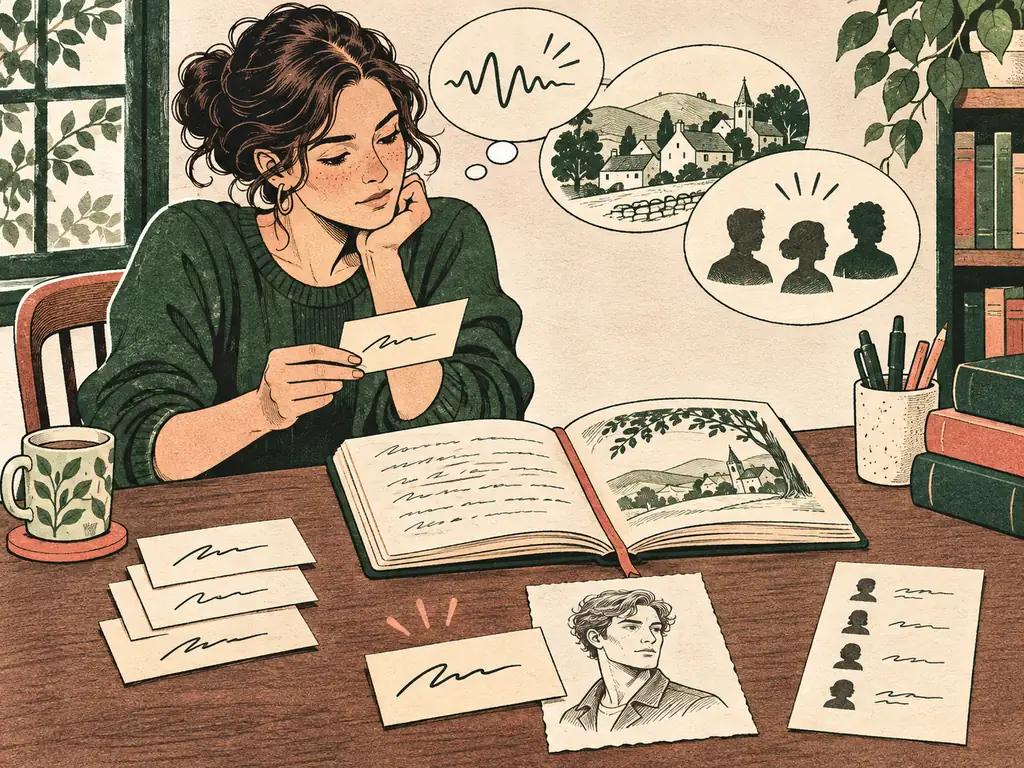
Separate what the story knows from what the reader should infer. If the family name is a clue to a hidden relationship, decide when that clue should become visible. If the character is hiding, displaced, adopted, or using an alias, the name may reflect a choice or a record rather than ancestry. Do not make a surname carry a plot fact that the story never explains.
Also decide how much attention the name deserves. A lead character whose name appears on every page may need a clean rhythm and easy spelling. A brief supporting character may need only a memorable distinction. A comic, mythic, or highly stylized work can support a more unusual choice than a realistic story, but the name should still fit the work's own rules.
Match the setting, family, and naming context
A contemporary story usually benefits from a surname that belongs naturally beside the character's place, generation, and family history. A fantasy or science-fiction setting has more room for invented forms, but freedom does not mean randomness. Decide whether families share a sound pattern, inherit names, change them after migration, or use different naming customs in different regions. Then apply that logic consistently enough for readers to trust it.
Ask who gave the character the name and when. A birth surname, chosen surname, stage name, title, translated name, and alias can tell different stories. If a character changed names after marriage, migration, estrangement, or a public career, make the timeline clear. A naming choice becomes more convincing when it follows from a relationship or event rather than serving as a decorative label.
Avoid treating one surname as a shortcut for a whole personality. A harsh consonant does not make someone villainous, and a polished name does not prove wealth. If the story deliberately plays with a reader's expectation, give the character enough depth to move beyond that first impression. Let behavior, choices, and relationships do most of the characterization.
How to choose a last name for a character in practice
Collect more candidates than you need, but stop before the list becomes a substitute for deciding. A surname generator, a setting-specific name reference, a family tree you created for the story, or a sound pattern you invent can all provide starting points. Save the source and your reason for keeping a candidate so that a later revision does not erase the context behind it.
For each option, note what it contributes and what it costs. One name may be easy to say but too similar to another character; another may fit the family history but require explanation every time it appears. Compare candidates against the same criteria rather than choosing whichever one feels striking on first reading.
- Gather a varied set. Keep roughly five to ten candidates with different lengths, rhythms, and levels of familiarity. Variety gives you something meaningful to compare; dozens of near-identical options usually do not.
- Check the first name beside each choice. Read the complete name, not the surname in isolation. Notice repeated sounds, awkward initials, accidental rhymes, and whether the full name is easy to remember.
- Test one real use case. Put the name in a line of dialogue, a cast list, a letter, a game roster, or the scene where the reader first meets the character.
- Remove weak fits for a stated reason. Record whether a candidate is unclear, misleading, hard to distinguish, or inconsistent with the setting. A reasoned rejection is more useful than an unexplained favorite.
| Invented option | With first name | Scene test | Review note |
|---|---|---|---|
| Mira Bell | Short and light | Easy to say in quick dialogue | May blend into a large contemporary cast |
| Mira Calder | Longer and more forceful | Stands out in a formal introduction | Use only if the tone and family context fit |
Test the full name in narration, dialogue, and the cast
Say the full name aloud at a normal speaking pace. A name that looks elegant on a page can be difficult to pronounce, while a name that seems plain in a list may become effective in a sharp line of dialogue. Listen for a collision between the end of the first name and the start of the surname, repeated syllables, an unintended rhyme, or a string of sounds that makes a character stumble over it.
Try more than one sentence. A name may work when spoken slowly but blur when a character is angry, hurried, or calling across a room. Put it after a title or relationship word, such as Captain, Aunt, or Doctor, only if that form appears in the story. The goal is not to eliminate every unusual sound; it is to notice what the reader is likely to experience.
Then scan the cast together. Compare surnames in the same chapter, scene, roster, or dialogue sequence. Two names with the same first letter, syllable count, ending, or visual shape may be easy to confuse even when each works alone. This matters especially in mysteries, ensemble novels, role-playing campaigns, and games with compact character menus.
- Read the full name in narration and in a line of dialogue.
- Compare spelling, first letters, syllable count, and endings across the important cast.
- Check initials, searchability, and whether the name remains legible in a list or interface.
- Ask a reader what they remember after a short break; do not treat one person's pronunciation as a universal rule.
Research real-world naming traditions without overclaiming
If a surname comes from a real language or community, verify the form before using it as an authenticity signal. Check spelling, diacritics, pronunciation guidance, name order, and the context in which the name is used. A name list can be incomplete, out of date, or detached from the history that gives a name meaning. Search results and a generator suggestion are starting points, not proof.
Do not assume that a surname identifies every person's nationality, ethnicity, religion, class, or family structure. Names cross borders, change spelling, move between languages, and belong to people with different histories. A fictional character may have a name for many reasons. If the story relies on a specific cultural detail, explain the character's circumstances instead of asking a surname to stand in for a whole community.
When the representation is important, consult sources written by people with relevant expertise or lived context, and consider a qualified sensitivity or language reader. Ask a focused question about the exact name and use rather than asking one person to validate an entire culture. Revise if the name depends on a stereotype, a sacred term used casually, or a false claim of historical accuracy.
Use a final cast and publication check
Choose the candidate that supports the story in the most places, not the one that wins a single sound test. A practical final review looks at the character's role, family history, setting rules, full-name rhythm, cast clarity, and research notes together. If two options work, choose the one that needs less explanation unless the more unusual name is doing a specific job.
- The surname has a clear story purpose, even if that purpose is simply to feel ordinary.
- Its relationship to the character's family, setting, and timeline makes sense.
- The complete name reads and sounds well in the scenes where it matters.
- It is distinguishable from the important cast without flattening family patterns.
- Cultural or historical claims have been checked, or the name is plainly presented as invented.
- You have searched for obvious conflicts and understand that this is not legal clearance.
Frequently asked questions
How do I choose a last name for a character?
Start with the character's role, family context, and setting. Make a short list, test each full name in a scene and against the cast, then verify real-world language or cultural details if they matter to the story.
What makes a good last name for a character?
A useful surname fits the story's context, is readable in the scenes where it appears, and is distinct enough from the important cast. It does not need to sound dramatic or signal a personality by itself.
Should a character's surname reflect their personality?
It can contribute to tone or expectation, but it should not replace characterization. Let the character's actions and relationships establish who they are, and avoid using sound alone as a moral label.
How can I make a fictional surname sound believable?
Create a consistent naming logic for the setting or family and apply it to more than one character. Check spelling and sound in context, and distinguish invented forms from real names when authenticity is not established.
Can I use a real surname for a fictional character?
Writers often use real surnames, but check their spelling, context, and unintended associations. A search can reveal obvious conflicts, though it does not provide trademark or legal clearance.